Semiconductor manufacturing has always been one of the most complex industrial systems in the world defined by fragmented data, isolated optimization, and tightly controlled information boundaries. Engineers deal with thousands of process steps, massive datasets, and constant pressure to improve yield while reducing cost. Over the past decade, digital transformation initiatives have added new layers of tools and analytics, but most of these efforts have remained confined within individual fabs or companies.
Manufacturing-X introduces a fundamentally different shift. It is not focused on improving a single factory. Instead, it is focused on changing how data flows across the entire industrial ecosystem. This includes suppliers, fabs, packaging houses, and even end customers.
For semiconductor professionals, this is not just another abstract initiative. It has the potential to reshape how collaboration happens across the supply chain, how process variations are understood, and how yield issues are diagnosed.
What Is Manufacturing-X in Simple Terms?
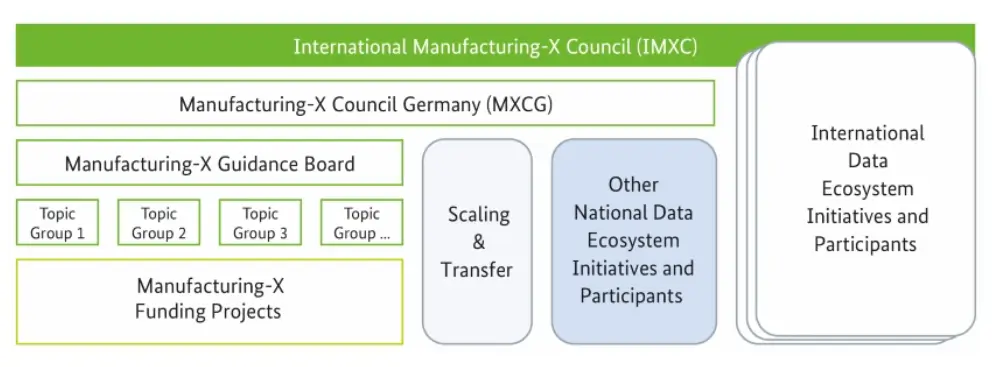
Manufacturing-X can be understood as a framework that enables companies to share industrial data with each other while still maintaining full control over that data. Instead of moving data into a central platform, each company keeps its data within its own systems. What changes is the way data is accessed and exchanged.
Through standardized interfaces and agreed rules, companies can expose specific datasets to partners. Access is controlled, usage is defined, and ownership remains with the original data provider. International Mnaufacturing-X Council (IMXC) is the driving force behind this initiative.
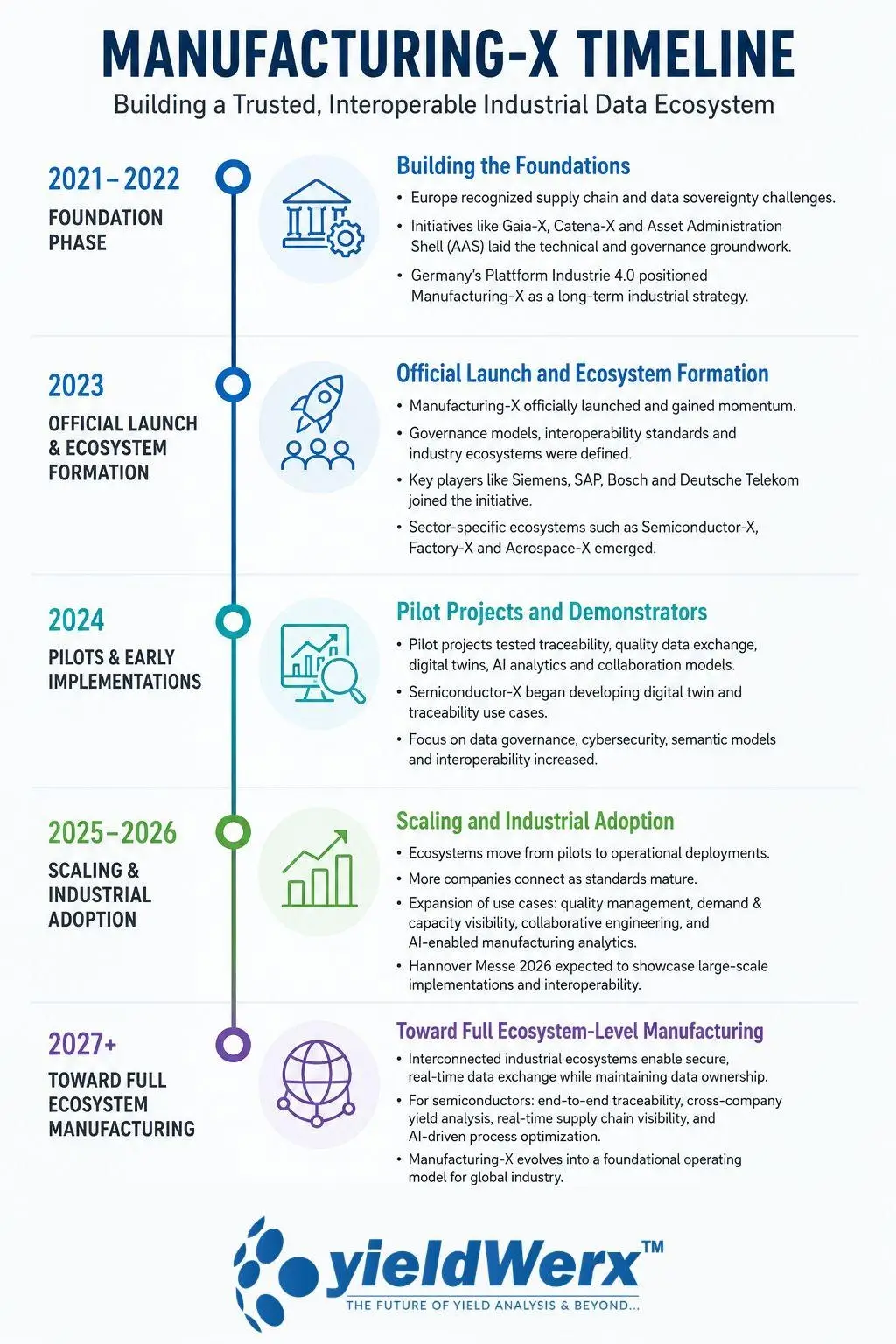
Understanding the Manufacturing-X Framework Architecture
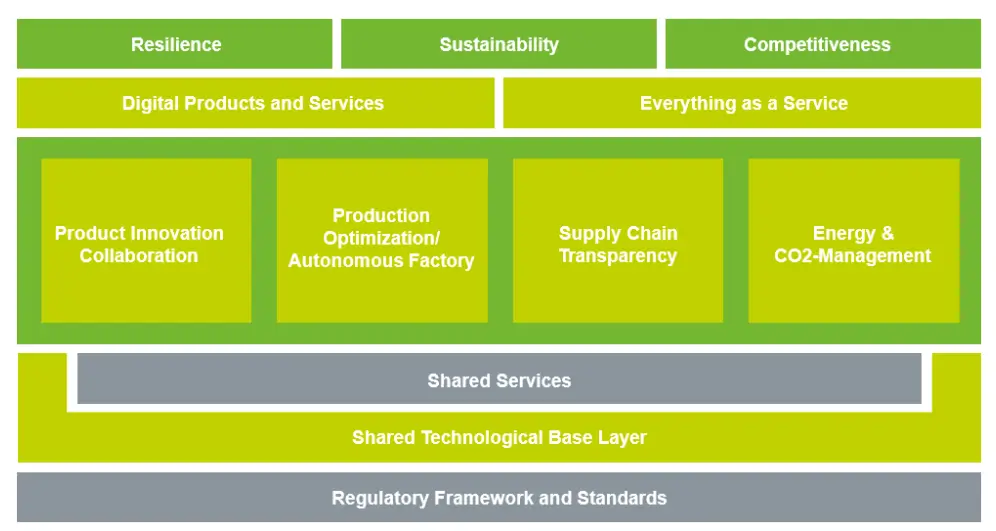
To fully understand Manufacturing-X, it is important to look beyond the high-level definition and examine its structure. The framework is built on several interconnected layers that work together to enable scalable data sharing.
Decentralized Data Spaces in Manufacturing-X
At the core of Manufacturing-X is the concept of a decentralized data space. Data does not sit in a single central repository. Instead, it remains distributed across participating organizations.
Each company connects to the ecosystem through standardized data connectors. These connectors allow data to be shared without physically transferring ownership. This approach is fundamentally different from traditional cloud-based models where data is aggregated in one place.
Data Interoperability and Standardization in Semiconductor Ecosystems
One of the most critical elements of Manufacturing-X is interoperability. Data sharing only works if the receiving system can understand the data being shared.
This requires common data models, shared definitions, and consistent semantics. Manufacturing-X attempts to standardize how assets, processes, and results are described. When implemented correctly, this allows data from different sources to be interpreted consistently.
Trust, Governance, and Industry-Specific Ecosystems
Trust is central to Manufacturing-X because companies will not share sensitive operational data without clear control over how it is used. The framework establishes rules around data access, usage, and ownership, allowing organizations to decide who can access their data, under what conditions, and for what purpose. These controls are supported by both technical and legal mechanisms to ensure secure collaboration across the ecosystem.
Rather than operating as a single system for all industries, Manufacturing-X is built around sector-specific ecosystems such as Semiconductor-X for semiconductors and Catena-X for automotive manufacturing. Each ecosystem addresses industry-specific needs while remaining interoperable with others, enabling broader collaboration and standardized data exchange across the value chain.
Why Europe Is Driving Manufacturing-X?
Staying Competitive in a Data-Driven Industrial Economy
Europe is pushing Manufacturing-X as part of a broader strategy to stay competitive in a world where data is becoming as important as physical production. While Europe remains strong in engineering and manufacturing, it has lagged in building dominant digital ecosystems. Manufacturing-X helps bridge this gap by enabling companies to collaborate through shared data without losing control over it.
Improving Supply Chain Resilience
Recent global disruptions exposed how limited visibility companies have beyond their immediate suppliers. In industries like semiconductors, this lack of transparency slows down response times and root cause analysis. Manufacturing-X aims to address this by enabling structured and secure data sharing across the full value chain, allowing companies to react faster and make better decisions.
Meeting Regulatory and Sustainability Requirements
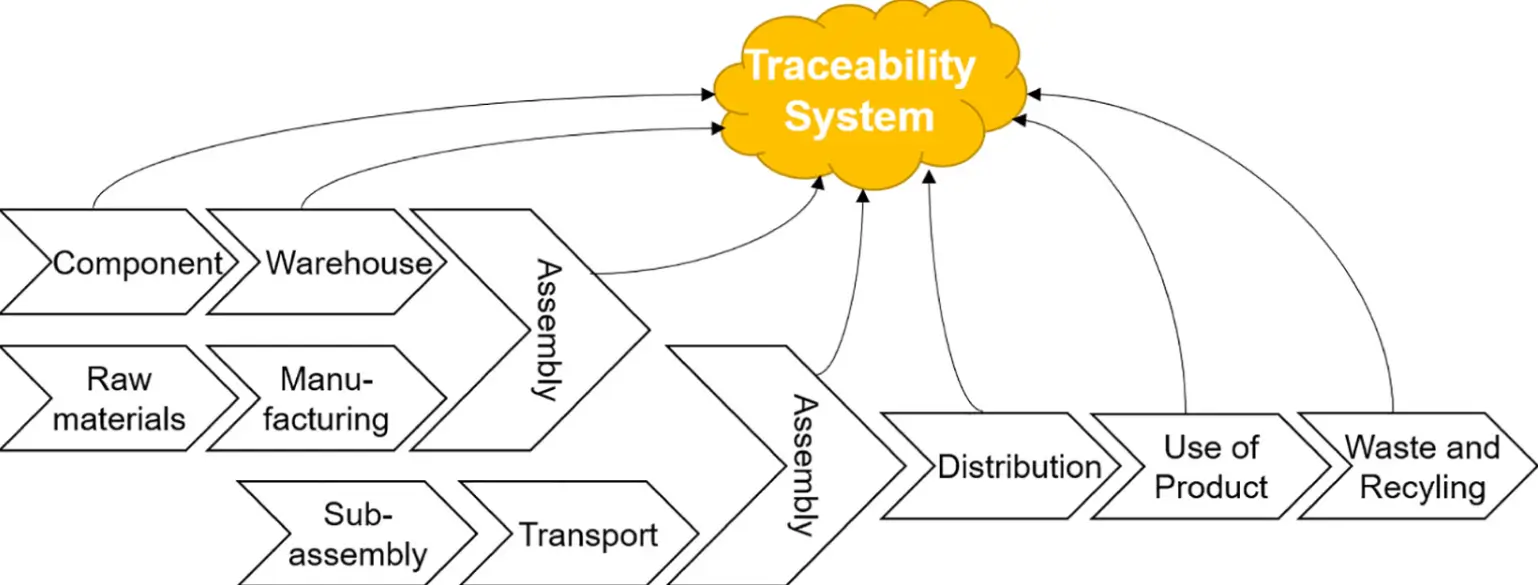
Europe is introducing strict regulations around carbon footprint tracking, product traceability, and lifecycle transparency. These requirements depend on data coming from multiple partners across the supply chain. Without shared standards, compliance becomes complex and costly. Manufacturing-X provides the framework needed to make this type of data exchange practical and scalable.
Reducing Dependence on Centralized Platforms
There is also a strategic concern about relying on a small number of global technology platforms to manage industrial data. Manufacturing-X promotes a decentralized model where companies retain ownership and control over their data. This approach helps avoid vendor lock-in and ensures long-term digital independence.
Enabling New Business Models and SME Participation
By standardizing how data is shared, Manufacturing-X opens the door to new data-driven business models such as predictive maintenance and usage-based services. It also lowers the barrier for small and medium-sized companies to participate in digital ecosystems, helping strengthen the overall industrial base.
What is Semiconductor-X and Will It Impact Semiconductor Companies Globally?
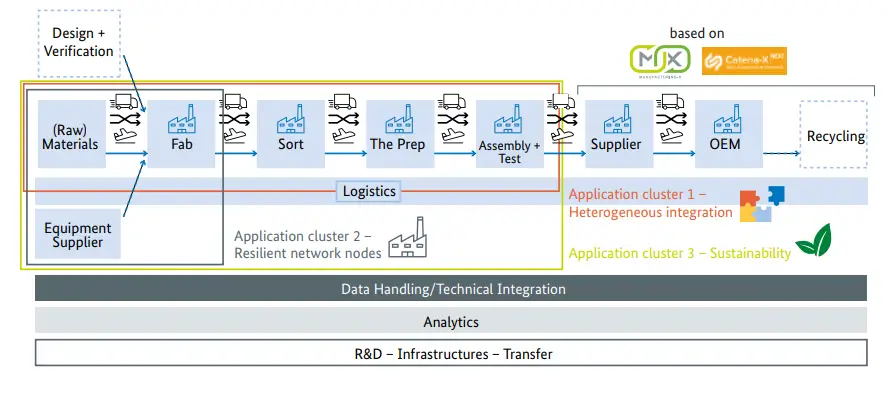
Semiconductor-X is a Manufacturing-X initiative focused on building a sovereign data ecosystem for the semiconductor industry. It introduces digital twin technologies to represent key parts of the supply chain, enabling capabilities like chiplet traceability, anomaly detection, and lifecycle data tracking. Using semantic data models and open-source approaches, it allows process, transaction, and other digital twins to be shared and aggregated across the ecosystem.
Although Manufacturing-X is driven by Europe, Semiconductor-X makes it clear that the impact will be global. Semiconductor supply chains are highly interconnected, and new standards for data exchange and traceability will extend beyond regional boundaries. Companies working with European partners will likely need to align with these frameworks, and over time, they may influence global industry practices.
For semiconductor professionals, this means understanding these developments is essential, as data-driven collaboration across the value chain will become increasingly important worldwide.
Impact of Manufacturing-X on Yield Engineering
For yield engineers, Manufacturing-X represents both an opportunity and a shift in how problems are approached.
Access to external data can significantly enhance root cause analysis. Engineers can correlate yield issues with upstream variables such as material batches or supplier processes.
However, this also increases data complexity. Engineers will need to work with larger and more diverse datasets. This requires stronger analytical capabilities and better tools.
The concept of yield itself may evolve. Instead of being measured at the fab level, it may increasingly be viewed as an outcome of the entire supply chain.
How Manufacturing-X Changes Test Engineering Workflows
Test engineering stands to benefit from improved data connectivity. Test results can be linked more directly to process conditions and upstream variables.
This enables faster feedback loops and more accurate identification of failure mechanisms. It also creates opportunities for predictive analytics, where potential issues are identified before they impact yield.
At the same time, test engineers will need to adapt to new data standards and integration models. The ability to work across multiple data sources will become increasingly important.
Preparing for Manufacturing-X in Semiconductor Organizations
Semiconductor companies do not need to wait for full-scale Manufacturing-X adoption to begin preparing. Organizations that strengthen their data infrastructure and collaboration workflows early will be in a much stronger position as these ecosystems mature. Here’re the steps they can take:
Step 1: Standardize and Clean Internal Data
- Standardize yield, defect, and process data formats
- Improve consistency across engineering teams
- Eliminate disconnected or duplicate datasets
- Ensure manufacturing data is easily accessible
- Strengthen internal data governance practices
Step 2: Invest in Interoperability and Open Architectures
- Support APIs and standardized interfaces
- Reduce reliance on proprietary data formats
- Modernize legacy systems where possible
- Build scalable and integration-ready data infrastructure
- Prepare systems for external data exchange
Step 3: Strengthen Traceability Across the Value Chain
- Improve lot-level and wafer-level traceability
- Track materials and supplier inputs more effectively
- Connect test, process, and supply chain data
- Enhance lifecycle visibility of products and components
- Enable faster root cause analysis across production stages
Step 4: Build Stronger Collaboration with Supply Chain Partners
- Align data-sharing workflows with partners
- Standardize reporting formats across organizations
- Improve visibility between fabs, suppliers, and OSATs
- Establish secure collaboration mechanisms
- Start with small pilot projects for data exchange
Step 5: Prepare for AI and Advanced Analytics
- Structure datasets for AI and analytics readiness
- Improve data contextualization and quality
- Develop predictive yield analysis capabilities
- Strengthen anomaly detection workflows
- Invest in scalable analytics platforms
How yieldWerx Helps Semiconductor Companies Realize Manufacturing-X
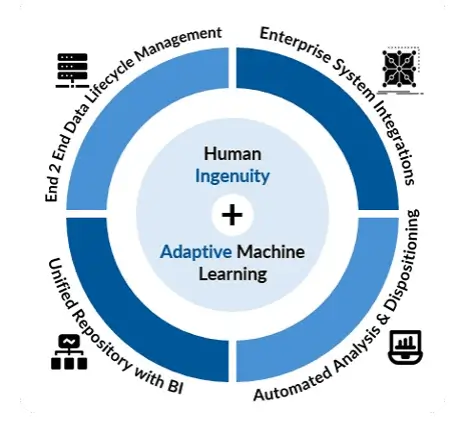
Unifying Data Across the Entire Value Chain
yieldWerx helps semiconductor companies aggregate complex and multi-source data. As Manufacturing-X expands data access across suppliers, fabs, and test environments, the first challenge is not collecting more data but making it usable. Our end-to-end data lifecycle management module standardizes and structures this data so teams can work with it immediately, without heavy manual preparation.
This allows engineers to see the full picture of yield behavior instead of analyzing isolated datasets. This unified view becomes essential for maintaining clarity and control.
Enabling Faster Root Cause Analysis
When issues arise, yieldWerx allows teams to quickly correlate failures with upstream variables such as process conditions, material batches, or test results with its powerful data traceability and quality control features. This significantly reduces investigation time and helps engineers move from detection to resolution faster, which is critical in high-volume semiconductor environments.
Improving Collaboration Across Teams and Partners
yieldWerx provides a shared analytical foundation where different teams and even external partners can work with aligned data. This supports the collaborative workflows that Manufacturing-X is designed to enable, ensuring that decisions are based on consistent and reliable insights.
Conclusion: A Shift Toward Ecosystem-Level Optimization
Manufacturing-X represents a fundamental shift in how industrial data is shared and used. It moves the focus from isolated systems to connected ecosystems.
For semiconductor professionals, this means adapting to a new environment where data extends beyond organizational boundaries. Yield, test, and process engineering will increasingly rely on insights derived from across the value chain.
The transition will take time, and challenges will remain. But the direction is clear. Companies that prepare early and build strong data capabilities will be better positioned to take advantage of this shift.
In the end, Manufacturing-X is not just about technology. It is about enabling a new way of working where collaboration, data, and insight come together to drive better outcomes in semiconductor manufacturing.
As Manufacturing-X expands data across the semiconductor ecosystem, yieldWerx helps turn that data into faster root-cause insights and measurable yield improvement.
References:
- Manufacturing-X Funding Scheme
- Manufacturing-X White Paper
- Use cases for Manufacturing-X: Benefits of data spaces in industrial practice
FAQs
Is Manufacturing-X a platform or a technology?
No, Manufacturing-X is not a single platform or software product. It is a combination of standards, governance models, and data-sharing infrastructure that allows multiple systems and companies to interoperate.
How is Manufacturing-X different from Industry 4.0?
Industry 4.0 focused mainly on digitalizing individual factories and connecting machines. Manufacturing-X goes a step further by connecting entire companies and supply chains, enabling data exchange across organizational boundaries.
What problem does Manufacturing-X solve?
The main problem is fragmented data across the supply chain. Today, companies struggle with inconsistent formats, lack of traceability, and slow collaboration. Manufacturing-X aims to standardize data exchange and make collaboration scalable.
What is a data space in Manufacturing-X?
A data space is a decentralized environment where companies can share data securely using standard interfaces. The data remains with the owner but can be accessed by authorized partners under defined conditions.
What are the different industry-specific variants of Manufacturing-X?
Manufacturing-X is implemented through several “lighthouse” projects tailored to specific sectors like:
- Catena-X (Automotive)
- Factory-X (General Engineering/Equipment)
- Aerospace-X (Aviation)
- Semiconductor-X (Chips/Electronics)
- Chem-X (Chemicals)
- Robot-X (Robotics)
- HealthTrack-X (Healthcare).
Does Manufacturing-X require companies to share sensitive data?
No, companies retain full control over their data. They only share what is necessary and under strict conditions. The framework is designed specifically to avoid forced data exposure.
What are the top companies adopting Manufacturing-X?
The key companies involved in adopting Manufacturing-X include Siemens, SAP, Bosch, Deutsche Telekom, Trumpf, DMG MORI, BMW, Mercedes-Benz, Beckhoff Automation, Atos, Orange, OVHcloud, Safran, Fraunhofer Society, the Gaia-X Association, and the International Data Spaces Association.